Pelicans can eat 4 pounds of fish per day.
They will take large amount of water together with the fish they catch. But before swallowing the fish, they move their heads forward to remove excess water.
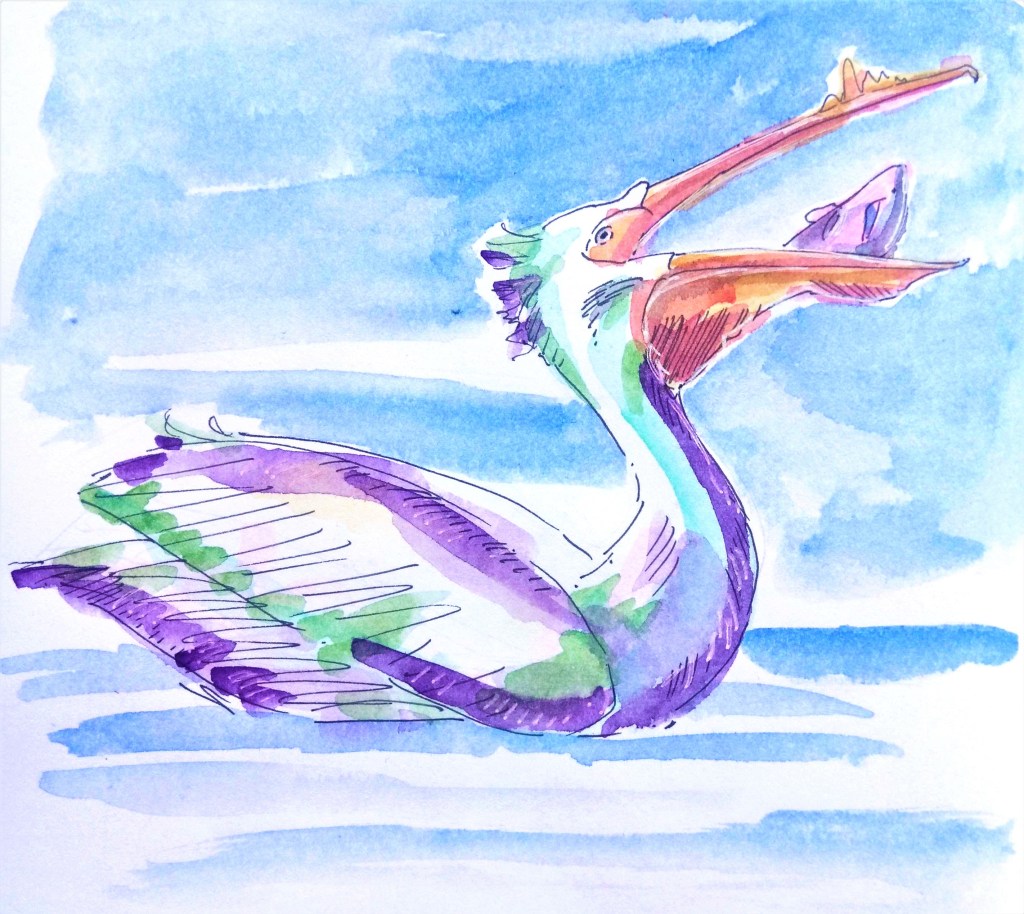

Pelicans can eat 4 pounds of fish per day.
They will take large amount of water together with the fish they catch. But before swallowing the fish, they move their heads forward to remove excess water.
It has been raining almost non stop for 9 days now… wondering how the sun looks like….
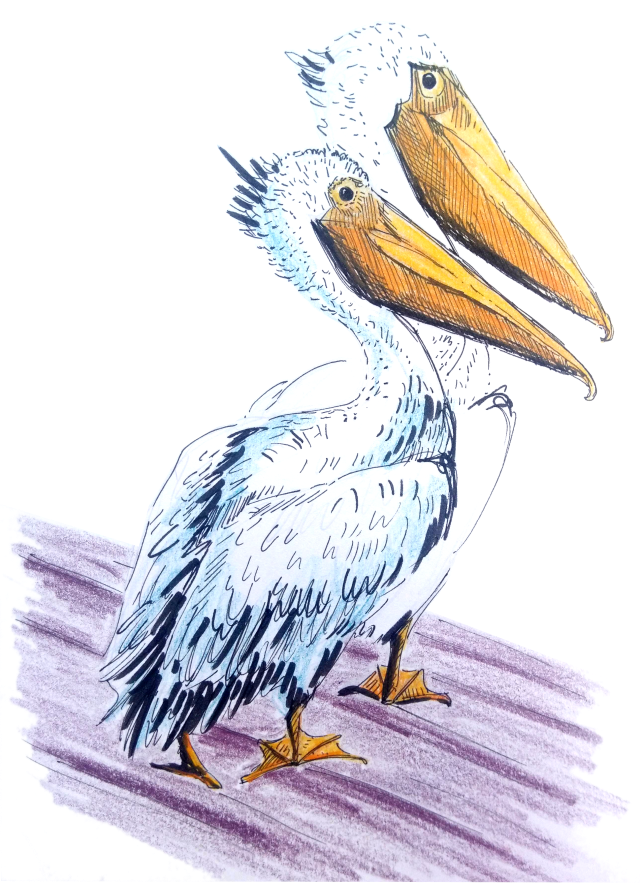
Off to the countryside to barbecue some fish. We not gonna catch it ourselves, that is too much work. But the eating part, we certainly can do.
Colourwise this pelican is one of my favourites so far. What do you think?
Happy weekend everyone!

A lone swimmer…

No, I have not gone pelican mad. But I still enjoy drawing them.
Find the odd one out of this group!

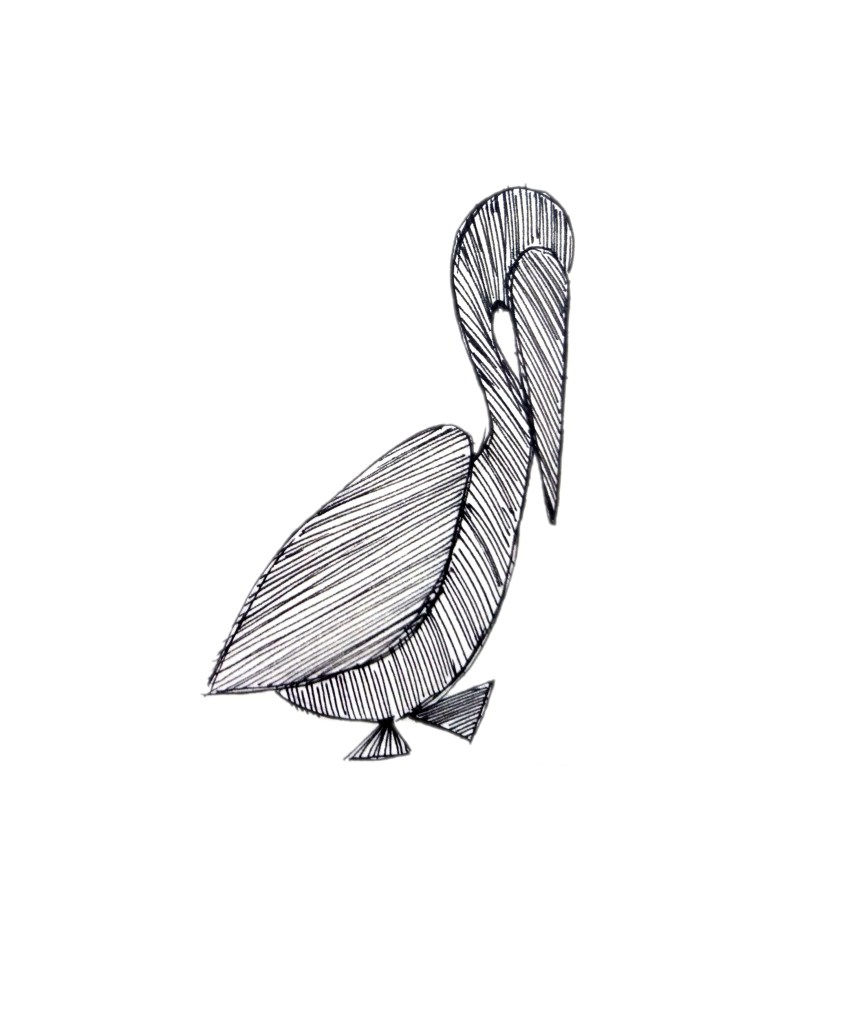

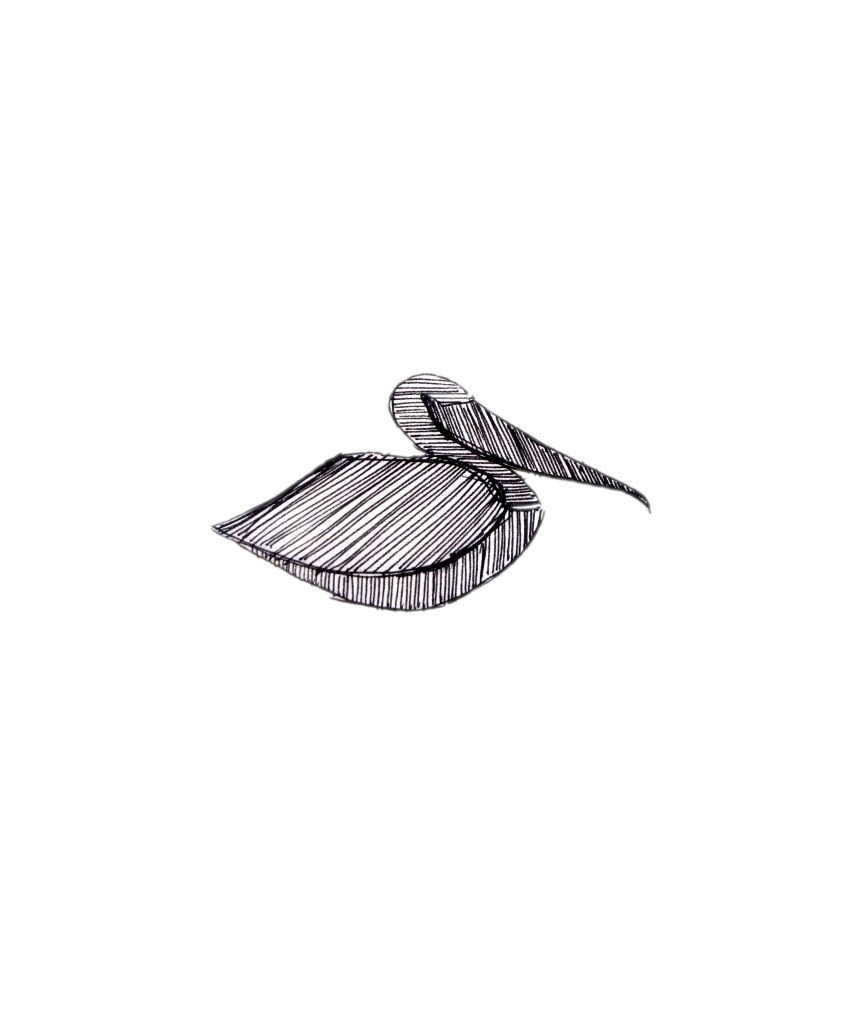
… or is he just hungry? I am not sure. What do you think?
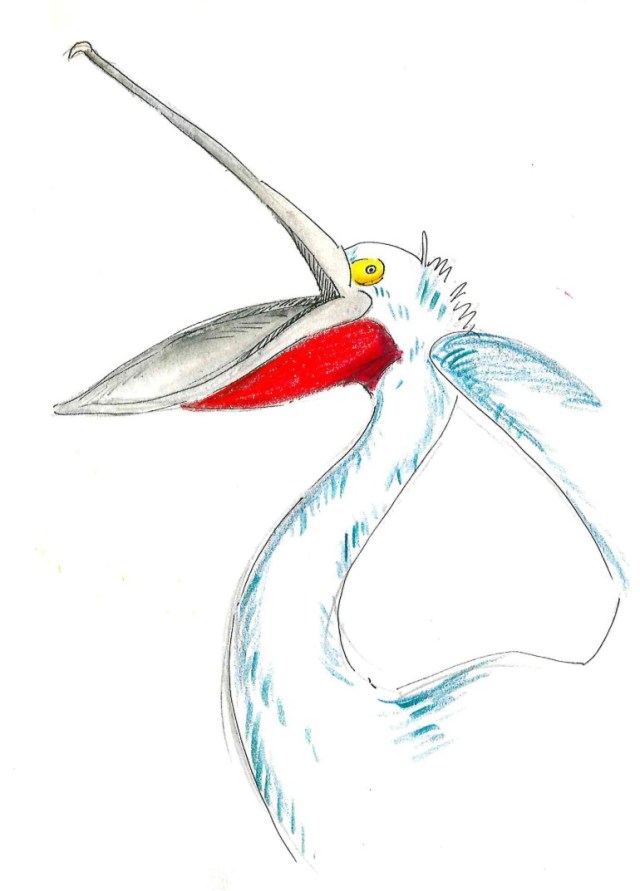
Although not being considered dangerous, pelicans are quite big and you wouldn´t want to mess with them!
The diet of pelicans usually consists of fish, but occasionally amphibians, turtles, crustaceans, insects, birds, and mammals are also eaten. The size of the preferred prey fish varies depending on pelican species and location. Apparently pelicans have even been observed eating smaller birds, sometimes scooping up water in order to drown them before swallowing.

Did you know that pelicans fly at an average speed of 25 km/h but they have been record with top speed of up to 65 km/h?
Their wing span ranges from 183 cm – 350 cm depending on the species. So yes, they are quite massive and you rather don´t mess with them.
Have a great weekend everyone!
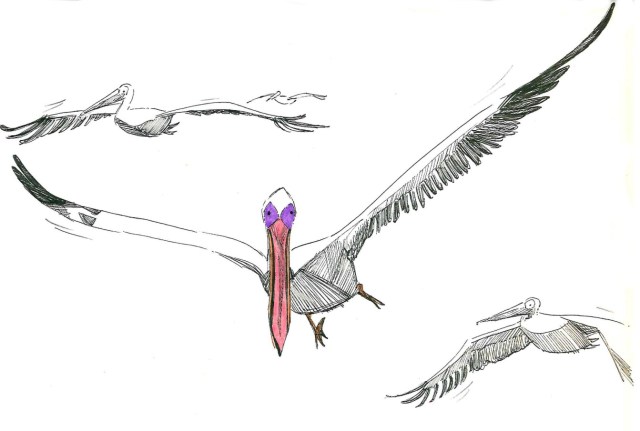
An adult pelican may eat up to 1.8 kilograms of fish per day!
The brown pelican is a keen-eyed predator that can spot a fish swimming under the ocean’s surface even while flying almost 20 m above.
Its bigger cousin, the Peruvian pelican, also has great vision. Once a target has been spotted from above, the pelicans plunge into the sea bill-first at high speeds—and often from great height. When they collide with the prey, the impact force usually stuns the victim and it is then scooped up in the pouch.

The brown pelican is a unique feeder that makes impressive dives from above the surface. They fly just above the surface of the water, then circle high, and when ready dive headfirst, plunging under water to catch fish.
They are able to dive from as high as 30 meters! The deeper the meal the higher the dive.
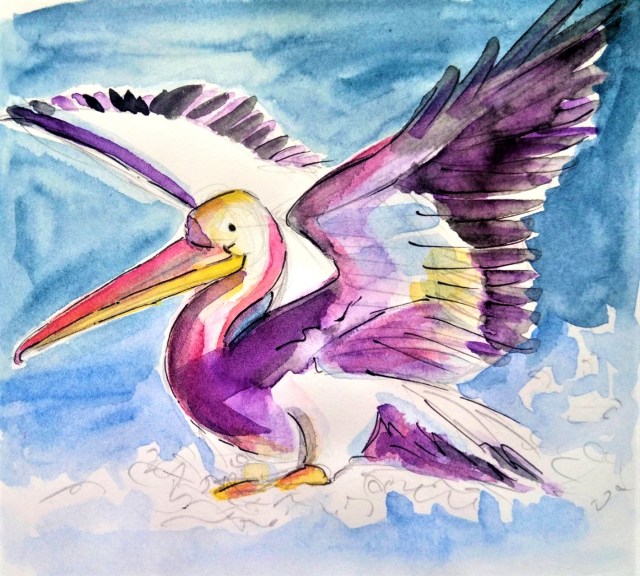
This pelican landing turned out purple for artistic expression.
Who has seen a baby pelican? I haven´t. Something unusual about the populations of coastal pelicans is that baby pelicans are never seen.
Pelicans nest far away in inland or remote locations in large breeding colonies. The pair chooses a relatively flat nest site on gravel, sand, or soil near other pelicans at the same stage of the breeding cycle. In southern, drier regions, they nest amongst sparse vegetation. In forested regions, sites may be under shrubs or trees.
Both parents feed their young.
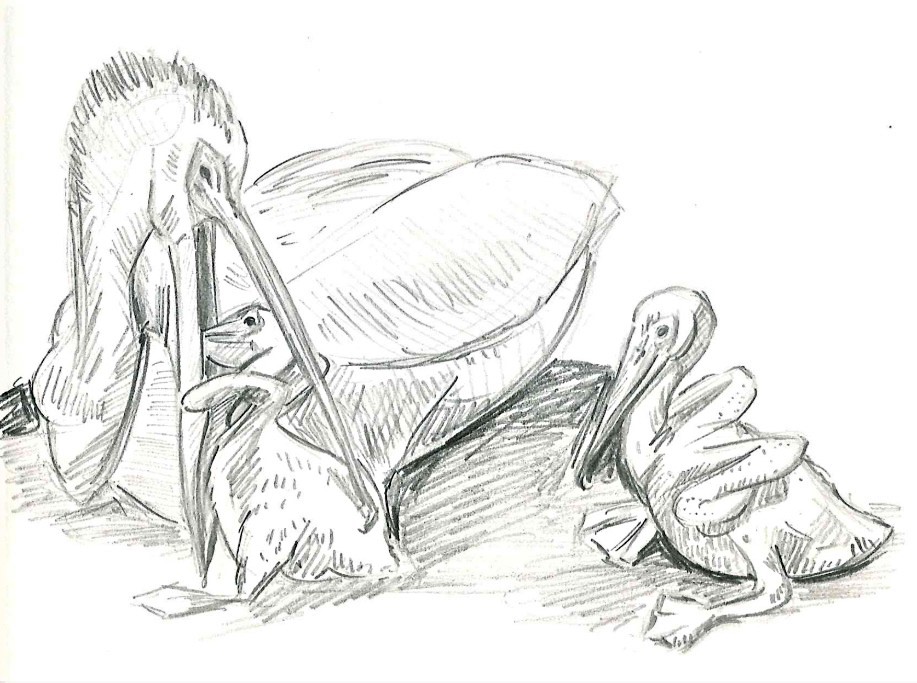
From about 25 days old, the young pelicans gather in “pods” or “crèches” of up to 100 birds. The parents recognise and feed only their own offspring.

Pelicans are very social birds. They live in large colonies composed of several hundreds of birds. A group of pelicans has numerous collective nouns, including pod, scoop and squadron.
Happy Sunday everyone!

Pelicans are a characterised by a long beak and a large throat pouch used for catching prey and draining water from the scooped-up contents before swallowing.
There are 8 different living pelican species. You can find them ranging latitudinally from the tropics to the temperate zone, though they are absent from interior South America and from polar regions and the open ocean.

Mr Fox and Mr Mouse are going on a journey. They have no idea where the winds might take them…

Some more window shopping travel sketches from my new sketchbook.
Souvenir shop window in the old town of Edinburgh.

A cake shop display near Haymarket. Damn, I want that cake!

Went on a stop over to Edinburgh last month. I enjoyed the city just as much as the first time I was there for a long weekend. And it seems I spent too much time drawing foxes the last month, as I started to see them everywhere.
I took the opportunity to stock up on sketchbooks and pens, as those things are rather pricey in Iceland. And of course I had to use them right away.
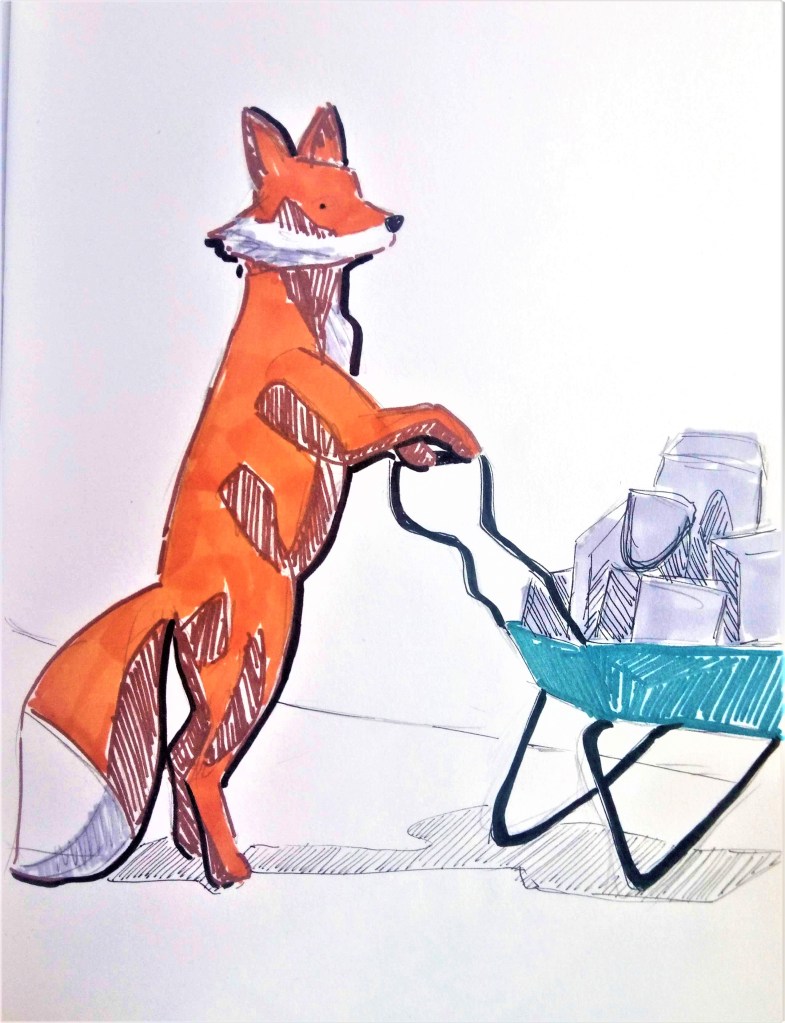


Winter is here and a storm warning is on for tomorrow. I think this will be my Christmas card for this year. What do you think?
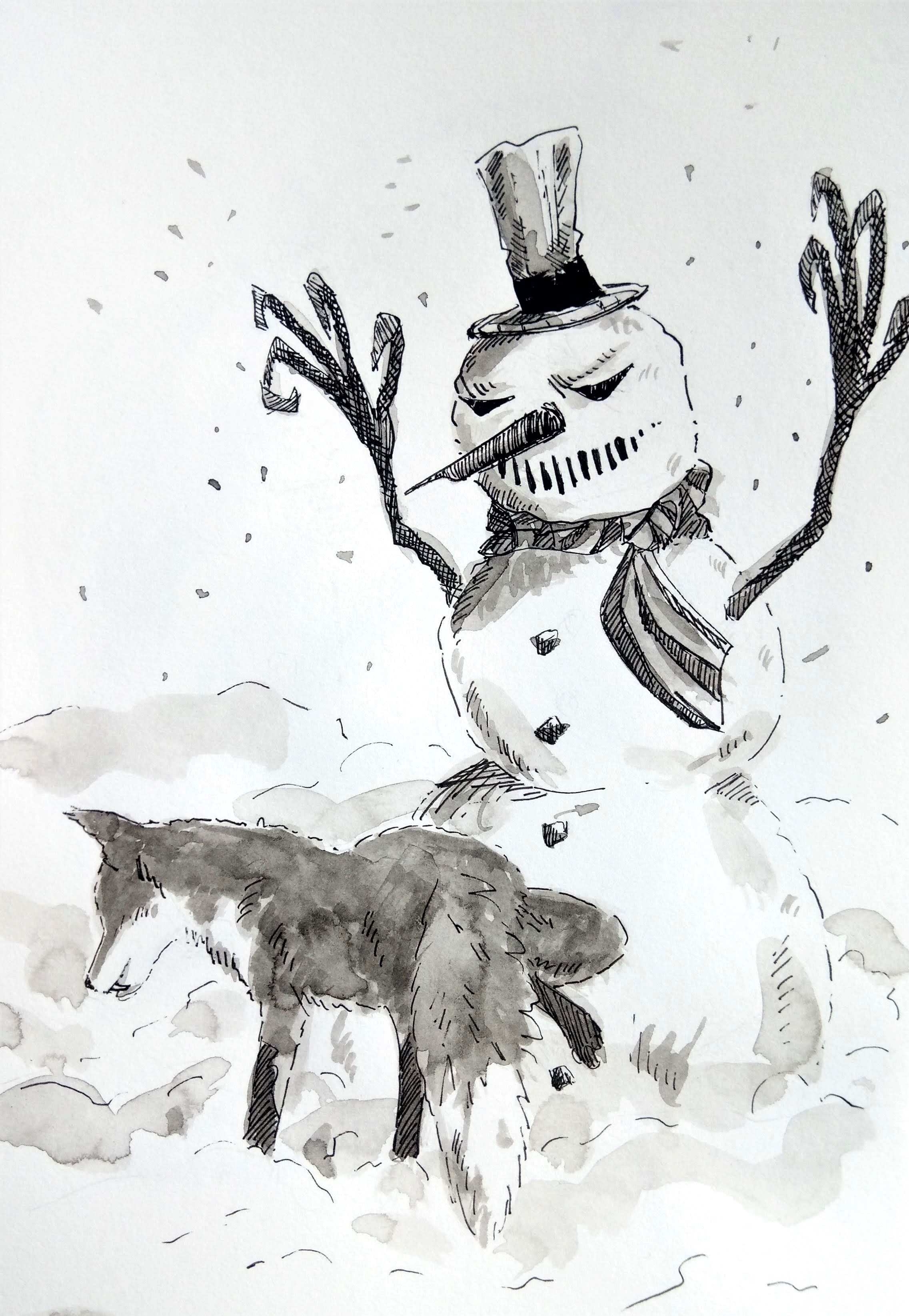
Little fox was still hungry after he caught the fish. So he started chasing after a mouse he saw passing by.

I´m aware that Inktober finished a while ago, and I also finally managed to finish the last drawing. All my plans of keeping up with drawing daily got interrupted by visitors and spontaneous out of town adventures. But I am not really complaining about it, as it was a lot of fun too.
I really enjoyed the prompt list this year, and I am always curious and excited to see the differences of my drawings between the last years.
Inktober 2017 got me back into drawing, and it was a real struggle in the beginning.
2018 I had a lot of fun with different characters and surrealistic scenes.
This year I wanted to learn how to stick to a character, which eventually developed into little Mr. Fox. What could his first name be? Maybe Emil?
I also started to work on illustrating a children´s book. And this was supposed to be some kind of practice for it. I feel I should also make a story out of the little fox.
Hope you had fun with him too!
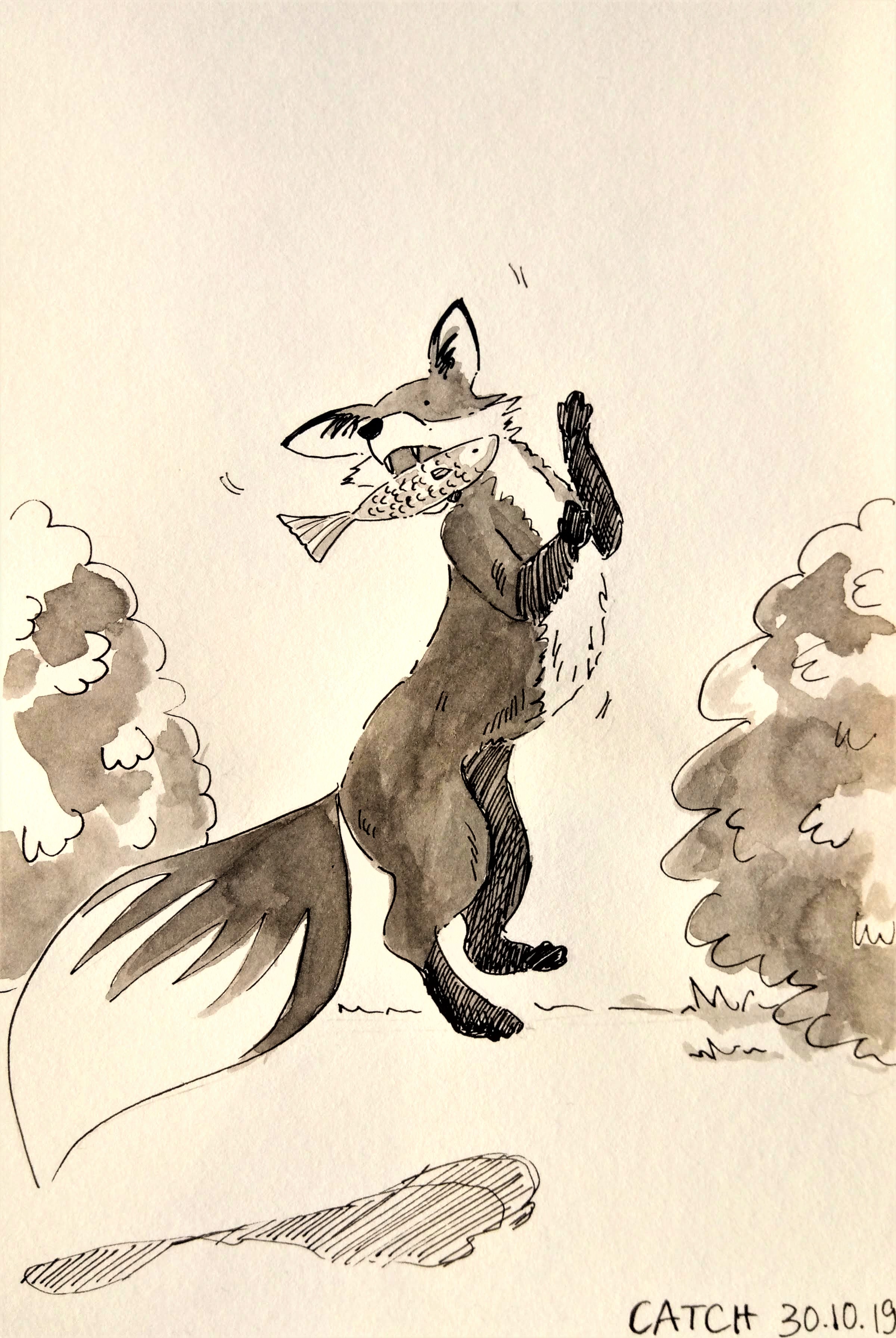
He didn´t know where the fish came from. But he tried to catch it anyway.
Time for a new winter coat?

 Melanie Franz